




Every story starts with a decision: the decision to say something out loud and see who listens. Long before you know the plot, or what any of it means, one sentence has to make a stranger want the next one. That is the whole job of an opening — and it is where most drafts stall. Not because the writer has nothing to say, but because they are trying to say all of it at once. What follows is the practical version: how to find a first line, settle a reader into a character and a place, and build a hook that holds.
Start with a line, not a plan
The worst way to begin is to sit down and demand a perfect first sentence. Perfection is slow, and slow is discouraging. Instead, give the line a smaller job: it has to create a small imbalance, a sense that something is slightly off and needs attention.
Compare these two openings.
The coffin was the wrong size.
It was a Tuesday in March, and the rain had not stopped since breakfast.
The first one has friction. Someone is going to have to deal with that coffin, and the reader knows it before a single character has been named. The second is not badly written, but nothing is pressing. Weather is scene-setting, not storytelling — unless the weather is doing something to somebody.
A first line also makes a promise about voice. "My mother always said I had a face for bad news" tells you the narrator is wry, self-aware and probably has a complicated family. You do not have to explain any of that. The line has already done it.
Try this: set a timer for ten minutes and write five first lines. Do not edit them. Read them back and notice which one makes you lean forward. It is usually the one where a person wants something and is unlikely to get it easily.
Decide who is talking
Before the second paragraph, you need to know whose head the reader is in. The reliable rule is to choose the point of view closest to the trouble. If the problem belongs to one person, stay with them. If it belongs to a household or a town, a wider view may serve you better.
Once you have chosen, resist the urge to introduce your character with a list of facts. Nobody remembers a description; they remember a behaviour.
Elspeth was a nervous woman in her fifties who worked at the library.
Elspeth checked the door was locked twice before she let herself look at the letter.
The second version tells you she is anxious without using the word, and it puts her in a moment rather than a summary.
Give them a want, however small
Your character does not need a life goal on page one. They need something they want in this scene. A cup of tea. An answer. To get out of the room without being asked a question. Small wants create movement, and movement is what keeps a reader reading. Ask yourself: what does this person want in the next five minutes, and what is standing in the way?
Ground the reader in a place
Two or three specific details will do more than a paragraph of scenery. Choose the ones only someone who had been there would notice. Sound and smell are underused and often more evocative than sight.
The chip shop on the corner had been shut for a month, but the smell of it had not left the pavement.
That single detail does several jobs at once: it locates the story, hints at a change in the neighbourhood, and gives the narrator an attitude.
Setting should also apply pressure. A kitchen mid-argument, a bus stop in the rain, a waiting room with one other person in it — places like these make characters behave differently. If your opening scene could happen anywhere, it probably is not doing enough work.
Build a hook that keeps the page turning
A hook is not a cliffhanger. It is a gap: something the reader wants closed, small enough to be satisfied soon and interesting enough to keep them going. You can build one with almost any of the following.
- Start after the decision. Skip the moment your character decides to leave, and begin with them already halfway down the road.
- Put something slightly wrong in the first paragraph. A name that does not fit. A guest who arrives early. A kitchen that is too clean.
- Give them a deadline. A train at six. A phone call due at noon. A person arriving for dinner.
- Withhold one thing. One, not five. Withholding too much turns curiosity into irritation.
- End the scene early. Stop before the conversation finishes, while the reader is still leaning in.
Whatever you choose, pay it off reasonably soon. A promise made on page one and ignored for fifty pages is not suspense; it is a loose thread.
Three ways openings go wrong
- The alarm clock opening. Someone wakes up, showers, eats breakfast. Nothing is at stake yet. Start later, at the moment something changes.
- The throat-clearing opening. Three paragraphs of family history before anyone does anything. Move the backstory later, or let it leak out through behaviour instead.
- The pretty opening. Lovely description of a landscape, with no person in it. Bring a character in and let them interrupt the view.
None of these are fatal. They are just early. Cut the first paragraph of most drafts and the story usually starts.
Your first page, drafted tonight
Here is a sequence you can work through in half an hour. Write one line with friction in it. Name a person and give them something they want before the page is over. Put them somewhere specific and add two details that could only belong there. Drop in one complication, small or large. Then read the whole thing aloud, which is the quickest way to hear a sentence that is trying too hard.
Finally, save the file and start page two. An opening is not finished when it is good; it is finished when the rest of the story exists to justify it. Write the messy version, keep the line that made you curious, and let the second draft do the tidying.
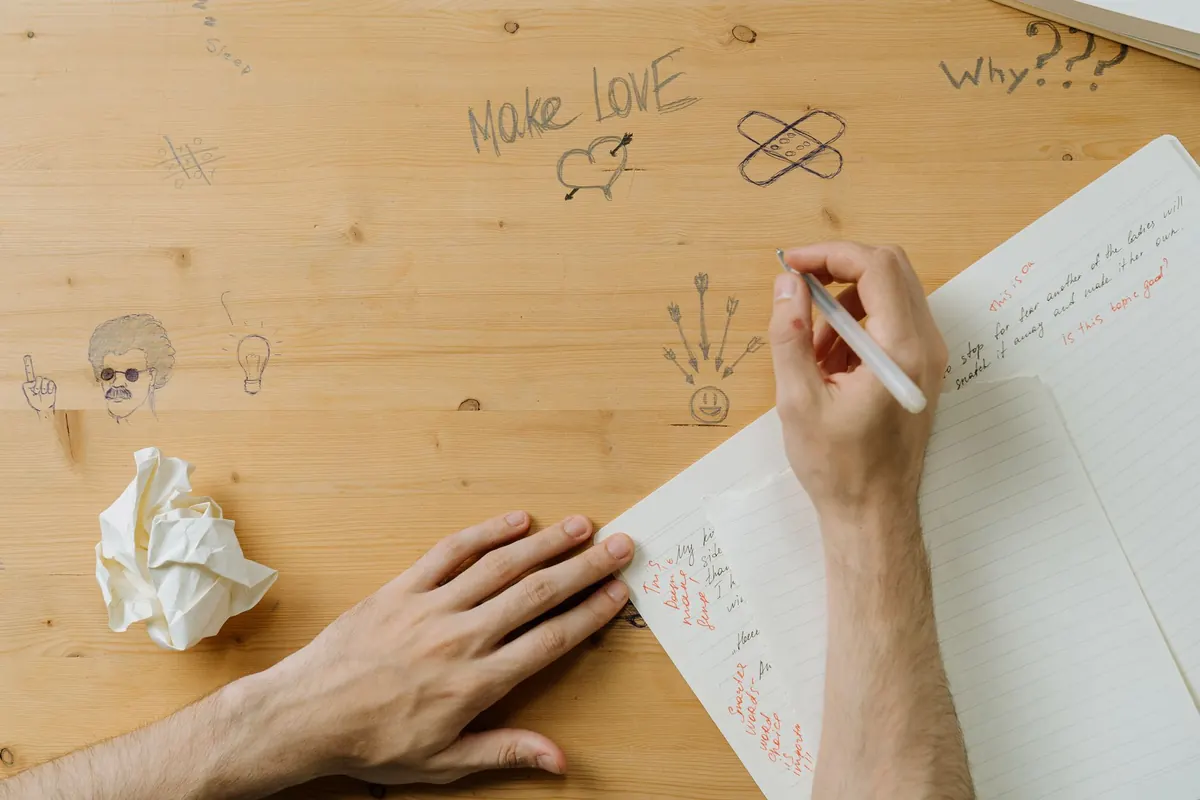
Photo: cottonbro studio / Pexels
Related posts
More stories you’ll love reading